
Support to Decentralisation and Sustainable Local Development in Georgia
The project Cooperation for Development – Support to Decentralisation and Sustainable Local Development in Georgia (C4D) was implemented by SALAR International 2024-2026 with funding from the Swedish International Development Cooperation Agency (Sida).
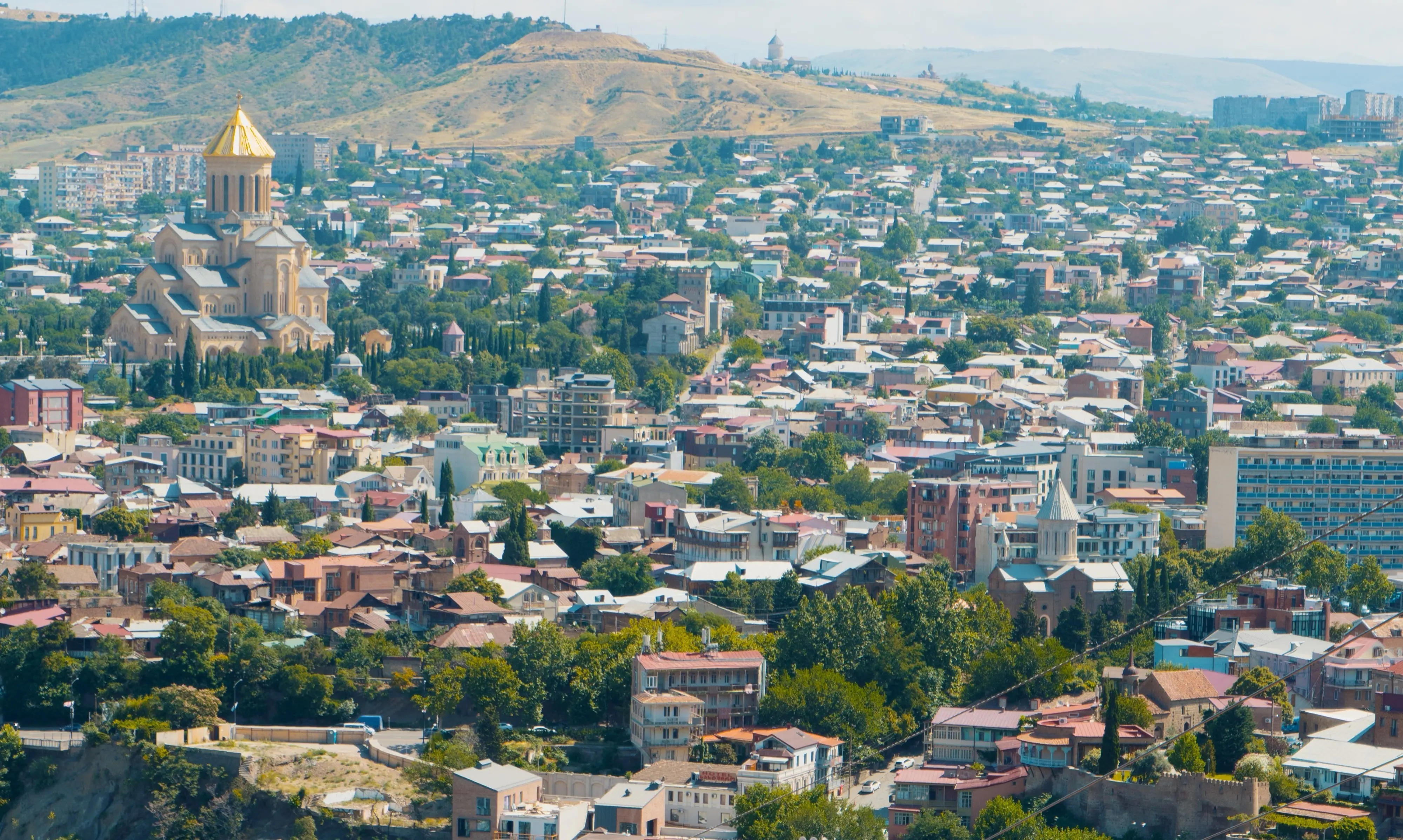%20webb.webp)
Over a period marked by both opportunity and uncertainty, the project aimed to strengthen local governance and advance sustainable urban development in Georgia. Through partnerships, knowledge exchange and capacity development, C4D sought to contribute to more democratic, effective and inclusive local self-governance — while supporting the country’s ongoing decentralisation process.
Supporting local development in a time of transition
Georgia is undergoing a decentralisation process aimed at strengthening local self-governance, improving public service delivery, and fostering inclusive development. At the same time, rapid urbanisation, coupled with growing climate and environmental challenges, has underscored the need for more integrated and sustainable approaches to urban and spatial planning.
Against this backdrop, the C4D project was designed to support Georgia’s decentralisation agenda, with a particular focus on urban development and spatial planning. Drawing on Swedish expertise and the SymbioCity approach, the project aimed to promote holistic, participatory, and sustainable urban development by strengthening local planning capacities and encouraging cross-sectoral collaboration.
The project also aligned with Sweden’s reform cooperation priorities for Eastern Europe, including democratic governance, sustainable development and resilience.
A changing and challenging operating environment
During the implementation period (2024–2026), the political context in Georgia changed significantly. These developments, together with evolving donor conditions and Swedish cooperation policy, fundamentally altered the conditions under which the project had originally been designed to operate, which was based on collaboration with public institutions, municipalities and national authorities.
As a result, SALAR International, in close dialogue with Sida, first paused implementation and then undertook a strategic review. The conclusion was that the project could not continue as originally planned, and the project has therefore been brought to a close.
Building knowledge, partnerships and practical tools for the future
Although the original implementation pathway could not continue, the project generated important foundations that remain valuable for future engagement.
During its lifetime, C4D established a dedicated project team, developed strong working relationships with Georgian and international stakeholders, and carried out comprehensive analyses of Georgia’s urban development and local governance landscape. These efforts were complemented by a series of studies exploring alternative pathways for supporting sustainable local development under changing circumstances.
Building on this work, SALAR International developed a revised project concept that explored how sustainable urban development could be supported through collaboration with academia, professional networks, civil society and other non-state actors. This shift reaffirmed the importance of locally driven development, citizen engagement, knowledge sharing, and professional capacity as key elements of resilient local governance.
Knowledge that lasts
Among C4D’s lasting contributions is the development and updating of a portfolio of knowledge products developed to support sustainable urban development in Georgia and beyond:
The Toolkit adapts the internationally recognised SymbioCity methodology, building on Swedish experiences, to the Georgian context, while the second edition of the Symbio City Approach provides the conceptual framework reflecting current knowledge and practice in sustainable urban development.
The project also produced a series of analytical studies examined key aspects of urban development in Georgia, including urban development and spatial planning, climate change adaptation, the development of secondary cities, civic participation in planning processes, and the availability of educational opportunities in urban planning. The main findings and recommendations from these studies were consolidated in the publication:
- Georgia's Urban Future at a Crossroad: A Synthesis Report from the C4D Project (2026) - soon to be uploaded
Together, these resources strengthen the knowledge base for sustainable urban development and form a knowledge base that remains relevant for practitioners, academic institutions and organisations working with local development.
Looking ahead
While this chapter of the C4D project has come to an end, its contribution does not end here.
The knowledge developed, the partnerships established, and the experience gained remain important assets. They provide a foundation for future engagement, whether in Georgia, across the wider region or in similar contexts.
Contact
Anna Gson Berg
Project Manager
anna.gson.berg@skr.se